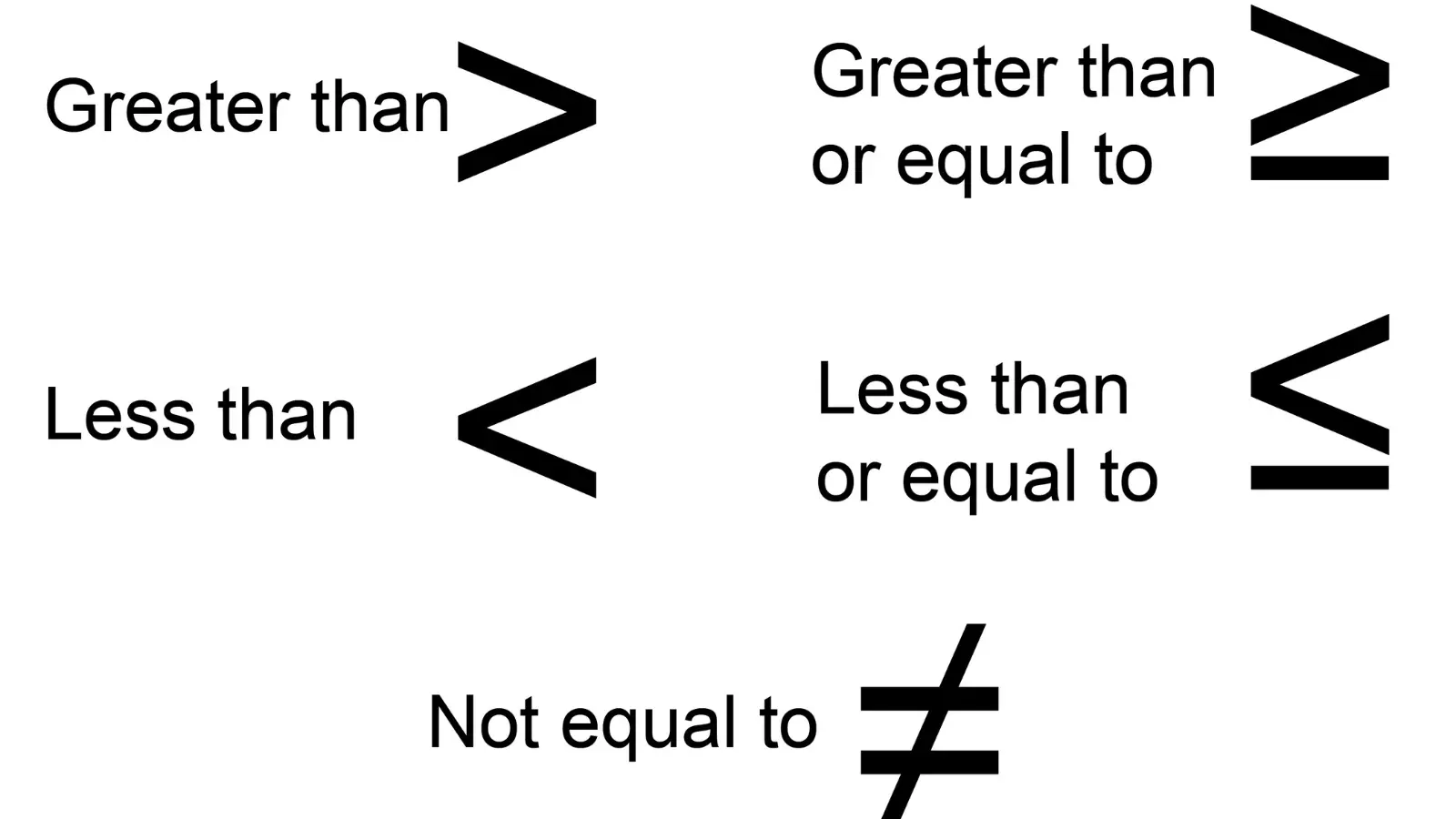
The less than or equal to sign (≤) is a mathematical symbol used to show that one value is either smaller than or exactly equal to another value.
For example, when we write 5 ≤ 10, it means 5 is less than 10, and when we write 10 ≤ 10, it means both values are equal.
People often search for the less than or equal to sign to understand its meaning, usage in equations, and how to type or apply it in different contexts like math, spreadsheets, or programming.
This symbol plays a crucial role in comparisons, inequalities, and real-world problem-solving, making it essential for students, professionals, and everyday users.
What Is the Less Than or Equal To Sign (≤)?
The less than or equal to sign (≤) combines two concepts:
- Less than (<)
- Equal to (=)
When combined, they create a symbol that means:
A value is either smaller than OR exactly equal to another value.
Example:
- 3 ≤ 7 → True (3 is less than 7)
- 5 ≤ 5 → True (5 is equal to 5)
- 9 ≤ 4 → False
How to Read the Less Than or Equal To Sign
Understanding how to read the less than or equal to sign correctly is key:
- “Less than or equal to”
- “At most”
- “No more than”
Real-Life Examples:
- You can spend $50 or less → Amount ≤ 50
- Age requirement is 18 or younger → Age ≤ 18
Less Than or Equal To Sign in Math (2026 Usage)
In modern education (including 2026 math curricula), the less than or equal to sign (≤) is widely used in:
1. Inequalities
- x ≤ 10
Means x can be any number up to 10, including 10.
2. Graphing on Number Lines
- Closed circle (●) shows inclusion (equal to)
- Arrow shows values less than
3. Algebra Equations
- Solve: x + 3 ≤ 7
- Answer: x ≤ 4
Less Than or Equal To Sign vs Other Symbols
| Symbol | Meaning | Example | Result |
|---|---|---|---|
| < | Less than | 3 < 5 | True |
| ≤ | Less than or equal to | 5 ≤ 5 | True |
| > | Greater than | 7 > 2 | True |
| ≥ | Greater than or equal to | 6 ≥ 6 | True |
Key Difference:
- < excludes equality
- ≤ includes equality
How to Type the Less Than or Equal To Sign
On Keyboard:
- Windows: Alt + 243 (numeric keypad)
- Mac: Option + ,
In HTML:
≤In Microsoft Word:
- Type
<=then press space (auto-correct may convert it)
In Excel:
- Use directly in formulas:
=IF(A1<=10,"Yes","No")Less Than or Equal To Sign in Programming
The less than or equal to sign (≤) is commonly written as <= in coding languages.
Examples:
Python:
if x <= 10:
    print("Valid")
JavaScript:
if (age <= 18) {
  console.log("Minor");
}
Why It Matters:
- Used in loops
- Used in conditions
- Used in comparisons
Real-Life Applications of the Less Than or Equal To Sign
1. Budgeting
- Expenses ≤ Income
2. School Grades
- Passing marks ≤ 50
3. Age Restrictions
- Entry allowed for age ≤ 12
4. Speed Limits
- Speed ≤ 60 km/h
Comparison: Less Than or Equal To vs Average Values
Let’s compare using real-world numbers:
| Scenario | Value | Condition | Result |
|---|---|---|---|
| Student score | 85 | ≤ 90 | True |
| Height (cm) | 170 | ≤ 165 | False |
| Budget ($) | 100 | ≤ 100 | True |
This shows how the less than or equal to sign helps define limits clearly.
Why the Less Than or Equal To Sign Is Important
1. Precision in Math
It allows exact comparisons without ambiguity.
2. Real-World Decision Making
Used in:
- Finance
- Engineering
- Data analysis
3. Logical Thinking
Helps build problem-solving skills.
Common Mistakes to Avoid
- ❌ Confusing ≤ with <
- ❌ Ignoring the “equal to” part
- ❌ Using it incorrectly in equations
Example Mistake:
- Writing x < 5 instead of x ≤ 5 (if 5 should be included)
Timeline: Learning the Less Than or Equal To Sign
| Stage | Learning Level |
|---|---|
| Primary School | Basic symbols (<, >, =) |
| Middle School | Inequalities (≤, ≥) |
| High School | Algebra & graphing |
| College | Advanced math & programming |
Interesting Facts About the Less Than or Equal To Sign
- It is part of inequality symbols
- Widely used in AI and data science
- Essential in algorithm design
- Appears in every programming language
How It Compares to Everyday Thinking
The less than or equal to sign (≤) reflects how we naturally think:
- “Spend no more than $20”
- “Arrive by 10 PM or earlier”
It simplifies complex decisions into clear conditions.
Frequently Asked Questions (FAQs)
1. What does the less than or equal to sign mean?
It means a value is either smaller than or exactly equal to another value.
2. How do you write the less than or equal to sign?
You write it as ≤ or type <= in most digital systems.
3. Is ≤ the same as < ?
No. ≤ includes equality, while < does not.
4. Where is the less than or equal to sign used?
It is used in math, programming, spreadsheets, and real-life comparisons.
5. How do you solve equations with ≤ ?
Solve like a normal equation, but keep the inequality symbol and include equality in the final answer.
Conclusion
The less than or equal to sign (≤) is a simple yet powerful mathematical symbol that plays a vital role in comparisons, equations, and real-world decision-making.
It allows us to express limits clearly by including both “less than” and “equal to” conditions in one symbol.
From solving algebra problems to writing code and managing budgets, this symbol is used everywhere. Its importance continues to grow in modern education and technology, making it an essential concept to understand.
Whether you’re a student, developer, or everyday user, mastering the less than or equal to sign helps you think more logically and solve problems more effectively.
